25 September 2011

Werribee Zoo

In between the finals games this weekend (and there are plenty of them: national, state and local footy, and rugby which I am considerably less familiar with), I managed to escape long enough to finally visit the Werribee Open Range Zoo just 30 minutes up the highway. I forgot my camera (a trend lately! - no proof of the footy-end-of-season party either :(  ) but I've borrowed the one at right so you can get a taste of my favorite part of the day.

The Werribee Zoo has a unique open range area where the animals wander in relative freedom. The public (as part of admission) is toured around in buses to get a peek at the unconstrained habits of giraffes, rhinos, hippos, and various antelopes and gazelles. It was pretty cool and there were a few moments when I was jealous of the tour guides.... and the tours they guide. I've never heard of a "touch the animals" tour in the US, have you?

photo from: http://www.welcome2australia.com.au/victoria/werribee/

17 September 2011

Images of Home

My family lives up and down the northeast coast so my month-long visit itinerary hit some of the best late summer vacation spots. I don't have pictures from all my adventures, but here's a pleasant sampling:

A couple days before Hurricane Irene I went up to Maine to visit my dear cousins. Now, Irene was hitting dry land as a category 2, which means by the time it got up to us it would be category 1 at best. That's a couple days without power and some downed trees. I wasn't worried and I didn't change my travel plans. 

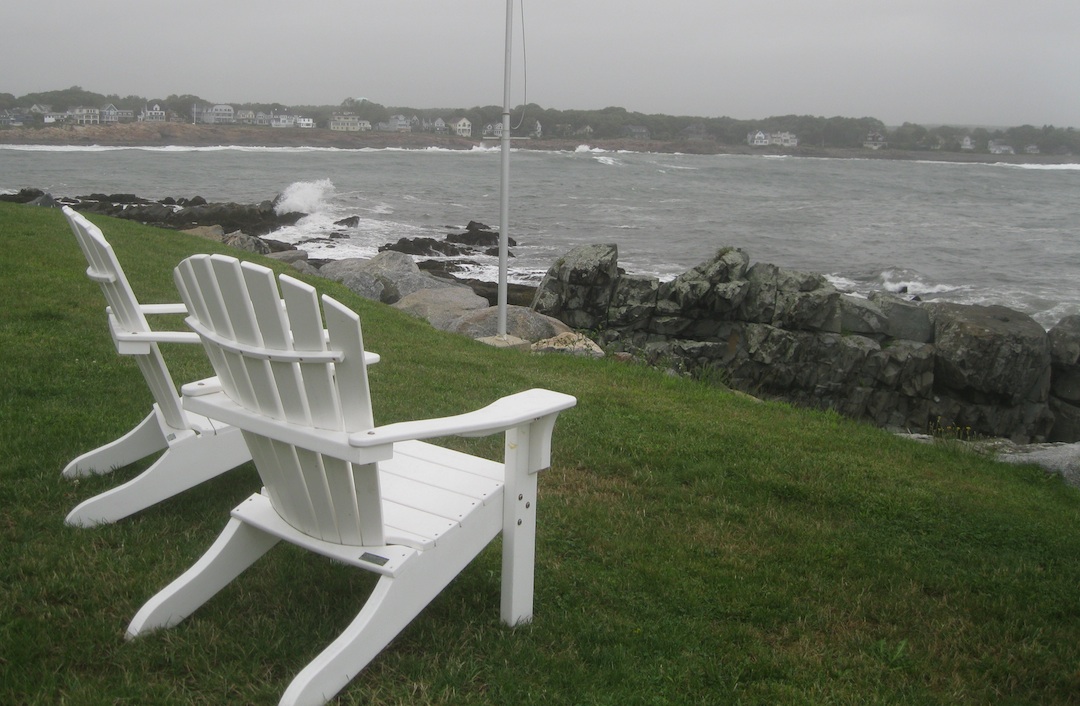
The calm before the storm.

Then, this time actually paying attention to the newscast, I saw a tiny little footnote that maybe should have been bigger: 8-9 feet of water surge. Oh, so that's why everyone is in a panic. I changed my travel plans and stayed in Maine to weather to storm. 

We did, as expected, lose power, even though the storm had died down and moved inland. After the brunt of the storm passed we escaped the dark house and non-flushing toilets by going to see the waves. We took a ridiculous amount of pictures.


 Very impressive, Mother Nature! 

My next stop was to visit the grandparents and co in New Jersey. It just so happened that my aunt and uncle had planned their annual trip to Ocean City that week. This is the only picture I have from the beach:

But I did have my camera handy for the birthday party.

She turned 3!
 Aren't they cute! 
It's a lie. 
I love them all, but the four of them combined are a force of nature to shame Irene.

 The adults also had fun. Uncle Gary surprise attacked Mom-Mom:


Who's counter attack failed miserably,


Uncle Gary wins! 
When the fun in Jersey was done, I jumped across the Delaware to visit my very good friend in Pennsylvania who became a new parent just a couple weeks before. I have a really great picture of my pre-baby visit, but I don't think she'd speak to me again if I put it on the internet. How about this one instead:


 How adorable.

A couple of days and 2 sleepless nights later I finished the circuit home to tour some very happy newly weds around the Hudson Valley. We traversed the new walking bridge - formerly the only rail line across the river, converted for the 400th anniversary of Hudson's trip up the river. I failed left and right to recollect interesting facts about the River and it's history. "I feel the ship was named something to do with moons... wait, that doesn't make sense... oh! there on the sign - the Half Moon. I was so close!"


We ate lunch just under the bridge at the Mayor's favorite resturant (I didn't know this before we ... actually, Patricia... pointed it on the menu as one of the establishment's fun facts.)


Then we tortured the poor new groom with our American and related social history lessons as we toured the grounds of FDR's childhood home.


We also decided that since we pay taxes we shouldn't feel awkward about making ourselves at home. It is a national PARK after all.

Then Patricia and I did that thing where we talk about period architecture or whatever terribly interesting subject comes to mind.


Not everyone in our company appreciated this, spawning this inspired piece of photography:


And that was it! Two days later I was on an uneventful flight back to Australia - I only went to the wrong airport (only in NY, I think, will you hear "oh, I've done that" and have a new itinerary offered without another thought.) and stood in an unnecessary immigration line causing me to nearly miss my connection to Melbourne. Easy as pie.

I'd just like to take this moment to thank all the babies on the long flight who did NOT cry (exorbitantly) and that nice couple who decided to move to another row leaving me 3 seats to myself by the window on a 15 hour flight.

Thanks.

No really: thanks.

12 September 2011

Far distant lands

I used to wonder how those princesses of old dealt with up and being married off to princes in far off lands.

I think I'm beginning to get an idea.

Return flight on Tuesday and after another bout of time travel I'll arrive home on Thursday morning.

18 August 2011

Weeds of a Different Kind


While hovering over a strip of islands so small they aren't bothered to be named on the informational flight map, the man next to me translates his Vietnamese paper.

"See this guy. He's a good guy. He's a doctor and he's going to jail," he points to a picture of a man flanked by soldiers. Summing up the situation he says, "Communists stupid!" He spits more than says the words.

He generously shares mandarins and homemade sweets with me throughout the flight. He not excited to sit for 14 hours and, as the only other person in the row, I'm his only target for conversation.

He starts one by interrupting my typing. He tells me he has seven years worth of prisoner of war stories.

"You can write that!" he gestures to my screen.

I've been trying to write a blog entry for weeks, and used the flight time to try and hammer it out. He has mistaken me for a professional writer. I kind of like that.

"Bang bang bang," he explains further, firing an imaginary gun, "they capture me."

His accent is so thick we make ourselves understood mostly in hand gestures. He takes me to be Australian and thinks my parents are crazy for choosing to live in America.

"Nice place to work, visit, but I never live there."

He arrived in Australia by boat. I think he explained that he made two attempts. I lost part of the conversation while I imagined getting back on that tiny boat knowing the hair-raising journey that lay ahead; unsure if you'll be turned away again. That is, if you reach your target. The seas in that area aren't forgiving. You wouldn't want to try a third time. Luckily or unluckily, my comrade in air was able to use his history as POW to pass immigration.
"I write a story on paper, they let me in. That's it. Simple."

He continues to expound on the stupidity of communist countries, proudly pointing out there are only four left. He gestures wide, encompassing his unseen countrymen:
"We have our freedom!"

He has lived in Melbourne for nearly 30 years, but clearly kept his ties.

"How many pages that be?" he asks, pointing at my unorganized paragraphs on the screen, holding his fore finger and thumb apart just enough to hold 200 pages.
"Too long!"
He laughs at his own joke. He goes back to his reading. I go back to my typing.

I feel like I missed an opportunity in not using the 14 hours to chat with a man so interested in sharing his experiences. I should have asked questions and showed interest and encouraged his monologue. But ten hours into my 32 hours of travel, and not having slept the night before, I just couldn't muster the hand gestures. Not to mention that I just finished reading Every Man in this Village is a Liar: An education in war by Megan Stack. I'd had my fill of war stories.


Stack relates her role in reporting on various Middle East conflicts from 9/11 to the bombing of southern Lebanon in 2006. She was adventurous, disillusioned, disheartened, and in danger. It is an intense read. One account follows her as she dodges bombs on a coastal road south of Beirut. The journey ends at a village that was only seconds ago laid to waste. The town was strewn with injured, dead, and dying. The damage is so bad the red cross can't move the ambulances to those in need. They crawl and stumble over the glass and rubble strewn streets. The journalists' professional facades fail and they run to help the inhabitants, mostly women and children who, Stack implies, were intentionally encouraged to stay put by political entities set on making their cause stronger.

After reading this passage, I lifted my head from the pages to take a break from the immense pressure this description lays on you. The happy weekend travelers who shared my train car were on their way to Melbourne to visit family and friends.

"Thanks grandma," I heard, and,

"Tickets please!"

People going about their everyday business completely oblivious to the fact that we had just escaped a war zone.

They probably are oblivious, I thought cynically. How many people here know someone who have ever remotely dealt with these sorts of issues?

I thought back over the people I've met who fit the category. Stories of amazing life struggles. Most of which are not "stories" as in they happened in the past, but are "stories" as in developing plot lines. People who accept miserable compromises to gain a slight advantage. People who have no other choice than to make due. Some, like my Vietnamese friend on the plane, will find a way out. Others will be exactly where they are today.

For the rest of their lives.

These are not nameless people on heart-wrenching TV commercials. These are people I know.

This is essentially Stack's message as I understand it: America's political actions are affecting real people. She helps us to know them like she did, so they are relatable individuals instead of faceless grouped entities.

*    *    *

My previous blog never came together because I couldn't make it anything other than what it was - a complaint-fest. My problems are slight and seem selfish to even mention as compared to those I'm trying to describe, but for the sake of elaboration, and because it was nearly finished, I will:

In perusing the Heywood DSE records, I learned that blackberries bushes are hunted down and exterminated with pesticides. That's right: good, sweet, tasty, fun-to-pick-on-a-lazy-summer-afternoon blackberries are a weed. This was yet another example of things that I think about as "good" or "innocent" but are problematic for Australia. Not just a problem, but actively harmful: i.e. causing extinction.

I became fixated on this realization. Think about it for a minute: you are in a place so totally foreign that anything you recognize is hurtful; anything familiar is imported, a stranger, and in some circles, highly unwelcome. This realization begins to weigh on you until you start to think that you too are a weed, a stranger, an unwelcome thing. After all, you are just another immigrant in a country that simply cannot support a large population. You are part of the problem.

What can you possibly do to counteract your "immigration footprint", you ask? Maybe be the best at what you do professionally…?

"Then I will be contributing, right?" you may think hopefully.

Well, any job you take is an opportunity taken from an Australian citizen. Any child you mentor, any volunteer activity you pursue, ANYTHING you attempt, will be done with a different view of the world. Not that those views are wrong, but they are decidedly wrong for Australia. And in a country that is still struggling to find its unique identity (and save it's flora and fauna from foreign invaders), you are only mixing the pot.

I just learned, literally two seconds ago, you can't compost fruit because you encourage the habitats of parasitic insects like the European wasp. I cannot describe the frustration at learning that something you think is a good habit is actually bad. Everything has to be re-learned. Everything!

Unfortunately, complaining about this subject didn't seem to make a very good blog. Especially while reading Every Man. Stack devotes a chapter in the book to describing a similar "I'm such a foreigner" feeling. This made me feel less alone, but not particularly better.

*    *    *

The difference between Stack's experiences of hardship and those of the people she describes is that at the end of the book, she changes assignments. Her war time experience was temporary, while the people she met cannot leave. It is their home. Even if they manage to leave, they are foreigners not by choice, but by displacement.

Us travelers by choice, we strangers in foreign lands, we choose to be where we are. You can get close, gain an understanding, but you can never know the country or the situations like those who live with it everyday. You cannot understand the endless, continuous, weighing struggle to put one foot in front of the other while having mud, proverbially or actually, slung in your face.

For my part, I was reminded, with a swift kick in the pants, that anything I face pales in comparison.

Stack makes no pretense at having an explanation for the mayhem she encountered. One desperately wishes that she will end with some nuance of hope for the future, but she does what journalists do: presents the facts, albeit with a more personal view than generally allowed in the newspapers. But it's her perceptive and comprehensive view of reactions on the ground that provide a captivating narrative. Really captivating. Raw reporting without the impersonal angle; the people she knew, the things she perceived as she saw it. I didn't sleep for days as I hung on every written word.


Everyman in this village is a liar: An education in war
Megan Stack, 2010
Scribe Publications
ISBN-13: 978-0767930345

15 July 2011

NAIDOC Ball

Last weekend I found myself with an extra ticket to the Victorian NAIDOC ball, the highlight event that ends a national week of celebrating Aboriginal and Torres Strait Islander communities.

Now I've attended quite a few Society of Women Engineers banquets and am very familiar with the pomp and ceremony of a formal affair, but I couldn't help gawking at the Martha Stewart like center pieces.

"Don't you do this sort of thing in the US?" I was asked, "Not even for your prom?" I don't know about you, but my prom was nothing like this. Or half as fun.

One friend described what I should expect: "It's just a black fellah get-together that ends in a piss up".

Turns out that was pretty accurate. Since this was the Victorian (ie local, not national) ball, it felt more like a formal family picnic. Everyone seemed to know everyone else. There were some out-layers. For instance, I couldn't decide if the people at my table just didn't know anyone or if they missed the memo about the point of the gathering - to celebrate. Needless to say, I didn't spend long at the table trying to figure it out. Things were too interesting everywhere else for me to spend time delving into their personal history.

The evening started out seriously. There were some introductory speeches - the obligatory Welcome which was extra special that evening because the elders leading the welcome had just been honored nationally. My memory fails me on the national Australian honor granted to the first woman, but the second elder I'd been introduced to earlier in the evening and now will never forget: Auntie Carolyn was named NAIDOC Elder of the Year this year. Earlier this week, I found myself confronted with her profile again when a friend showed off the art exhibit she is included in at the Footscray Community Art Center. Auntie Carolyn is one of the three elders involved in the project. Clearly a force in the community.

There were also memorials - Lionel Rose, an influential community leader passed this year.

There was dancing. The big hit of the evening were the young dancers dancing the mosquito dance. The whole room laughed as one while the little ones, aged 5 - 12, faked frantic itching from the unseen pests.

There were more speeches after that based on the evening's theme of "Civil Rights - Still A Fight", but local conversations quickly drowned out any sense of organization. The party spirit in the room could not be contained. People amused themselves, ignored the organizers, and waited for the dance floor to open. When they kicked us out of the convention center at midnight, we moved to the Crown Casino where time doesn't exist and the party never ends. I heard stories that some people continued through to 6pm Monday. I'm amazed at the stamina, but was myself happily tucked into bed by a modest 4am Sunday morning.

12 July 2011

BBQ and Birds

This week I've seen enough rainbows for a life time. Heywood is part of what is called the Green Triangle - the part of Victoria that didn't suffer from the recent droughts.

It was another wet week and we carted boxes from the shed in between rain drops. I was worried we'd be trapped in the motel room again all week, but in fact this week flew by. This was helped by a number of factors:

For starters, I had a short week. It's time for round one of fun-with-visas. First step: Find a lawyer.

Secondly, the archive work is progressing well and the shed is just about half cleared. Nothing raises the spirits like spring cleaning gone well.

And third and most tasty, the power went out on Monday. I missed this bit of excitement, but I was back to work in time to learn that the meat in the fridge had started to defrost. The field crew, it was explained, expects to be well fed during the firefighting season, and, that time of the year having just passed, there were about 50 choice cuts of beef in danger of ruin. We can't let that go to waste can we? Wednesday we had lunch.


In a side note, it's bird mating season. At home, this means waiting to see those cute little sparrows feeding their eager young. But folks, we are in Australia and there isn't much cute around here. To compensate for the harsh environment certain birds nest in open fields so they can see predators coming. When agitated they swoop at the offender, targeting the eyes and using spurs on their wings to maim and send creators of all sizes running away whimpering.

One of these birds is nesting in the DSE office yard.

The first week we spend terrified that our eyes were going to get pecked out.


Last week we learned that this particular bird - the masked plover - doesn't actually strike it's targets; "its just trying to scare you" said the local newspaper article. I stopped fearing this species and became terrified of accidentally disturbing Magpie parents nesting on our route back to the hotel. Those guys are out to get you.

This week we were brave enough to take pictures. Well some of us - this is my colleague's hand defending herself as she bravely makes a run for it (bird in background).


The poor birds spend so much time defending their young they are hardly on the nest. We don't think the little ones will make it so we are just dealing with the swooping until they abandon it and try again at another spot. I feel badly that the parents are always so agitated, but the thought struck me at one point that this may be the only time that I can safely "we were here first. "

02 July 2011

Weeding


Active train tracks we walk over to get to work. 


One of the documents I ran across this week explained the best way to go when dealing with an invasive pine in a native forest: hand removal.

Weeding in a forest.

Puts 250 archive boxes into perspective, doesn't it?

This week my archiving partner and I spent bonding with the inhabitants of the office. The field workers whose space we have invaded keep offering to take us on drives around the country. The people in the office have offered to set up security access so we can use the kitchen facilities after hours (there being none in the motel). It's country hospitality at it's best.

I'm just jumping at the chance to use that hospitality to experience some of the unique experiences available only in the Aussie bush.

One of my goals for this assignment is to get the field workers to take me for a ride in one of the big toys. There is no guarantee that they'll have cause to use them while we're out here, but as the 3 week project has been extended to at least 6 the odds are looking up.

Anyway, I've gotten close.

The big guns.